
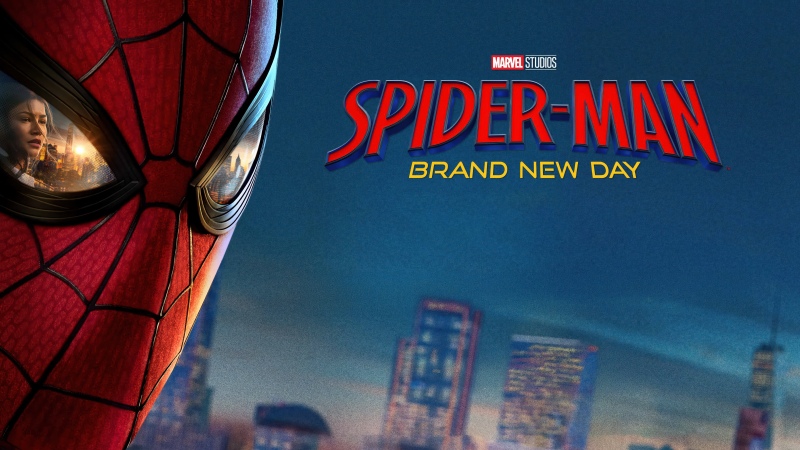
Destin Daniel Cretton’s Spider-Man: Brand New Day acts as a deliberate, radical course correction. It is a film constructed entirely around the concept of erasure. By stripping away the high-tech bells and whistles, the cosmic stakes, and—most importantly—the emotional support system of Peter’s personal life, the production team has executed one of the most compelling soft resets in modern franchise filmmaking. What emerges from the narrative debris is a tense, tactile, and psychologically rich character study that traded cosmic spectacle for human vulnerability.
Narrative Architecture: The Melancholy of Anonymity
The screenplay, penned by Chris McKenna and Erik Sommers, understands that true isolation is not merely physical; it is structural. The film opens not with a high-flying set piece, but with a lingering, silent montage of domestic routine: Peter Parker boiling water on a single-burner stove, counting crumpled bills, and listening to the muffled arguments of neighbors through paper-thin apartment walls.
By removing the global memory of Peter Parker, the film shifts its genre alignment. This is no longer a globe-trotting sci-fi adventure; it is a street-level crime drama structured around urban decay. Peter’s struggle is no longer saving the universe from universe-altering artifacts, but attempting to stop a predatory criminal syndicate exploiting destitute neighborhoods—all while holding down a low-wage delivery job to avoid eviction.
While the narrative thematic trajectory is exceptionally clear, the script does stumble under the weight of commercial obligations. The second act suffers from a noticeable dip in momentum. As Peter investigates the criminal network, the film pauses to lay foundational groundwork for future franchise installments. These exposition-heavy sequences temporarily derail the tight, claustrophobic atmosphere established in the first hour, forcing a character-driven thriller to momentarily speak the language of a corporate cinematic universe.

Direction and Visual Craft: Reclaiming the Physicality of Action
Director Destin Daniel Cretton approaches the visual language of Spider-Man with a kinetic, hand-to-hand philosophy that sets it apart from previous entries. Working with a visual style that favors practical lighting and low-angle framing, Cretton rejects the glossy, weightless aesthetic that has plagued recent green-screen blockbusters. The camera frequently operates at eye level within dark, tight alleys and crowded subway platforms. New York is rendered through rain-slicked concrete, deep sodium-vapor yellows, and dark neon blues, framing the city as a living, oppressive entity rather than a sterile backdrop.
Director Destin Daniel Cretton approaches the visual language of Spider-Man with a kinetic, hand-to-hand philosophy that sets it apart from previous entries. Working with a visual style that favors practical lighting and low-angle framing, Cretton rejects the glossy, weightless aesthetic that has plagued recent green-screen blockbusters. The camera frequently operates at eye level within dark, tight alleys and crowded subway platforms. New York is rendered through rain-slicked concrete, deep sodium-vapor yellows, and dark neon blues, framing the city as a living, oppressive entity rather than a sterile backdrop.
The web-slinging sequences in Brand New Day carry tangible physical consequences. Instead of smooth, sweeping digital long takes, the camera tracks with a tight, hand-held jitter. You hear the stretch of woven fabric under tension, the impact of boots slamming into brickwork, and the heavy breath of an exhausted human being inside the mask. Combat is close-quarters, brutal, and clumsy; Peter relies on desperate improvisation rather than calculated computer algorithms.
Performance Analysis: Holland’s Masterclass in Restraint
Tom Holland’s performance here represents a career milestone. Having spent years playing Peter Parker with wide-eyed, youthful eagerness, Holland adapts his physical acting to reflect a young man broken by profound loss.
Holland alters his body language entirely: his shoulders are rounded, his vocal pitch is lower and more deliberate, and his eye contact is hesitant—capturing the exact social awkwardness of someone who goes days without speaking to another human being. When he puts on his hand-stitched suit, there is no celebratory fanfare. The mask acts as both a moral duty and a dark shelter from his own thoughts.
The supporting cast, composed mostly of grounded street-level figures and local citizens, provides a solid anchor, though few get enough screen time to leave a lasting mark against Holland’s dominant screen presence.

Technical Breakdown
Direction (8.5/10): Cretton successfully grounds the franchise, prioritizing visceral combat weight and character intimacy over CGI spectacle.
Screenplay (7.5/10): A deeply resonant study of grief and responsibility, though slightly undermined by Act II franchise setup requirements.
Cinematography (9/10): Outstanding use of practical street lighting, shadow depth, and tactile camera movement.
Production Design (8.5/10): The contrast between bleak, crumbling New York apartments and industrial criminal hideouts reinforces the grounded tone.
Sound Design (8/10): Replaces sweeping orchestral arrangements with ambient city noise, heavy physical impact sounds, and isolated string motifs.
Direction (8.5/10): Cretton successfully grounds the franchise, prioritizing visceral combat weight and character intimacy over CGI spectacle.
Screenplay (7.5/10): A deeply resonant study of grief and responsibility, though slightly undermined by Act II franchise setup requirements.
Cinematography (9/10): Outstanding use of practical street lighting, shadow depth, and tactile camera movement.
Production Design (8.5/10): The contrast between bleak, crumbling New York apartments and industrial criminal hideouts reinforces the grounded tone.
Sound Design (8/10): Replaces sweeping orchestral arrangements with ambient city noise, heavy physical impact sounds, and isolated string motifs.
The Verdict: A Triumph of Scale Over Spectacle
Spider-Man: Brand New Day proves that comic book adaptations do not need to constantly escalate stakes to remain captivating. By shrinking the scale, the filmmakers have paradoxically raised the emotional stakes. It serves as a reminder that the enduring power of the Spider-Man mythos has never been about the suit, the villains, or the grand spectacle—it is about the quiet, unyielding integrity of a person who loses everything and still chooses to help others.
For audiences fatigued by endless CGI battles and multiverse gimmickry, Brand New Day offers something far more rewarding: a film with dirt under its fingernails, blood on its knuckles, and a heart that beats with real, human vulnerability.
Final Score: 8.5 / 10